
Herpes... Let's talk about it...
Written by: Tamar Simone Weir
There were two moments that are solidly in my memory, and remain there. Being barely 18, freshmen year of college and at my sisters house. My vulva was really hurting in an unfamiliar way and I knew that something was different, something was wrong. So she said take a picture and show me. And thats what I did. I took a picture in the bathroom and then went back into the bedroom/living room of her studio apartment for us to examine the picture with her then boyfriend now husband. We all looked at the picture and her boyfriend said," From what I can see it looks like herpes".. And in that moment I knew, that he was probably right. If we fast forward a few weeks, I'm at Kaiser and I am getting tested, the doctor swabbing my vaginal area to get a sample of the sore. While she does this she says that she's almost certain that it is genital herpes, but that the sample will confirm. She hands me a booklet about STI's and general information. And that is that. She leaves the room and says the results can be checked online. Her matter of fact way of speaking, and her emotionless gaze, I remember to be so cold that I cried then and there but knew there would be no comfort in the space. The space I would always remember. In the "Women's Health" clinic, but no, you can't expect your doctor to show empathy and have the care in regards to your emotional wellbeing.. I took my little pamphlet and some antiviral medication they prescribed that can be useful for outbreaks, and went back to my freshman dorm to cry in peace.
As a new college student with a budding sexual curiosity and in my slut era, this was life altering, this was devastating. I spent weeks hating myself and overanalyzing what this meant for my life, for my sexual life, and my future in college. I knew that there were people around me who were very accepting, but at the same time I did not know other young people my age who also experienced this STI, the one that doesn't go away after a few weeks of medication. I felt very alone, and dirty. The stigma that STI's still carry today, create this deep sense of shame and dirtiness, because when society deems something gross and undesirable, something you don't talk about and avoid at all costs, then it is very difficult to go against that narrative and find the confidence of acceptance.
After many weeks of crying daily, of not wanting to think about my sexuality and my body, and putting it off for as long as I could, I began to do the much needed research to answer all my questions and fears, all the looming doubts that Kaiser did not even begin to help me heal from. I'm sure many of you reading this have had great experiences at Kaiser facilities, and have loved your treatment, but from someone who in the same 2 years was diagnosed with herpes in such a cold way, to then being labeled by a different female doctor as a "High Risk Sexual Teen" for openly and honestly disclosing that I had many sexual partners and was in open relationships, it has become a place I don't love. I was permanently labeled as a high risk sexual teen in my medical health history file, one that still today has that label at the top of my chart. Why? I really still do not understand and cannot comprehend why my doctor at the time felt it was necessary to further stigmatize healthy sexual exploration in this way. At the time I remember just laughing it off and being mildly offended when seeing my file later that day, but now it infuriates me. For those people who have been sold this narrative that by openly exploring your sexuality that equates you to being a slut or at risk, you are not alone, this happens at a disproportionately high rate.
In "Treating Those Who Struggle With Their Sexual Desire", David J. Ley Ph.D. explores how in the history of the U.S there has been a long tendency and trend of allowing moral and social biases to intrude upon clinical judgement and treatments. He further states how healthcare is susceptible to influence by social and moral concern and thus has lead to a lot of harm to innocent people. Not only that, but the U.S has a deep history in pathologizing many sexual acts. For instance, masturbation was diagnosed as a mental illness in the early 1800's and physicians concurred that it led to insanity. The article written in the National Library of Medicine also states that, doctors and health physicians were so concerned by masturbation and the links in desire/arousal that they tried to "cure" this by performing circumcisions and clitoridectomies..... There are countless stories within the medical field's history that showcase these extreme levels of fear that society has had around sexuality, and in particular female sexuality.
This neglect and pathological view of sexuality remains today strong and alive. This extends to many different aspects of our sexuaity as a species. For instance, within the Kink and BDSM world, there is a very big gap in knowledge and a huge bias among clinicians. In, "Alternative or Nontraditional Sexualities and Therapy: A Case Report", Sprott explores and uses their research to study areas that are heavily under studied. Sprott analyses the frequency that clinicians will experience treating people that have interests in consensual non monogamy, BDSM, or other nontraditional sexualities, and connects that to the insufficient research and resources for clinicians to best serve and provide competent care for individuals. This article states that, 25-30% of clients who practice alternative expressions of sexuality may never tell their therapist, for fear of stigma and reactions which has been supported by research on clinicians reactions to BDSM. This is alarming because this further exemplifies how much stigma there is in the 21st century around sexuality as a whole, and even further when you dive into the less accepted and traditional explorations of the heteronormative monogamous experience.
So why does this all matter? Well when we think of our sexuality displayed in front of us like a movie or a powerpoint, there are many elements to what we see. There is all the beauty and sexyness, but there is also all the pain and shame and fear. All of it is there. Everyone carries the movie of their desires and sexuality, and a majority of the script for our movie, hasn't even come from us, but has been internalized so deep that it seems like it has.
I remember the first year after knowing I had genital herpes. The guy who gave it to me had oral herpes, which means that he had the simplex virus (HSV-1). And he gave me genital herpes (HSV-2). Many people don't know this because it is still highly stigmatized and a taboo, but someone with oral herpes can give another person genital herpes and vice versa. This can happen from oral sex and oftentimes happens when one person is unaware that they even have herpes or unaware that their oral herpes is indeed contagious and is part of the same umbrella diagnosis of herpes. The guy that gave it to me claimed he knew he had oral herpes but has had it for so long and didn't think anything of it, didn't know that it could be transmitted to the genitals. Whether or not this is true, I will never know, but what is clear is that there is so much misinformation and general lack of information it is appalling.

The Stigma of Herpes in Society
The stigma surrounding herpes is a significant social issue that affects many individuals diagnosed with the virus. This stigma can lead to feelings of shame, isolation, and anxiety, impacting mental health, interpersonal relationships, and overall quality of life.
The World Health Organization (WHO) estimates that over 4 billion people are infected with herpes simplex virus (HSV) types-1 (HSV-1, 3.7 billion cases) and -2 (HSV-2, 400 million cases). This is a substantial number of people, so lets dive into some key points to consider:
1. Lack of Awareness and Education
Many people have limited knowledge about herpes, leading to misconceptions and fear. Just like my herpes experience, many people who are herpes positive, were not consensually given herpes, they did not know that their partner had some variation of the virus....
Common myths include:
Herpes is only transmitted through sexual contact.
People with herpes are promiscuous or irresponsible.
Herpes is a life-threatening disease.

2. Media Representation
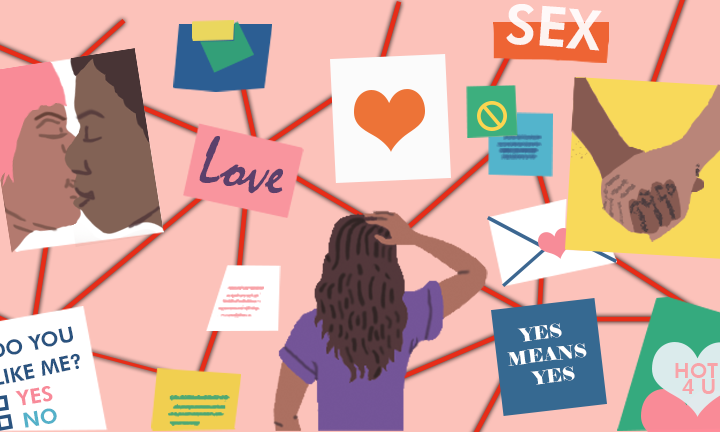
Media portrayals often reinforce negative stereotypes about herpes, depicting it as a shameful condition. This representation can perpetuate fear and misunderstanding among the general public. Most movies, even now have undertones or very clearly stated messages of sex negativity, ones that include vagueness and desire without communication. People are supposed to just know what the other body or bodies like to recieve, what they've experienced in the past, and what they want for this moment. All of that is wrapped up in a sensual eye gaze and usually that's the only "conversation" that takes place before the sexual encounter. This type of sexual behavior is very common, the spontaneous desire, where sex is easy and it should just flow if its the right moment, no need for questions, conversations, disclosure, nothing. This has a huge role in the way that young people forge romantic and sexual relationships, because we tend to reenact what we see, therefore creating more confusion and less conversation.
3. Impact on Relationships
The stigma can create barriers in personal relationships, as individuals may fear disclosing their status to partners. This fear can lead to:
Difficulty in forming new romantic relationships.
Challenges in maintaining existing relationships.
Increased anxiety and stress about sexual health.
The impact on relationships and the most important, your relationship to yourself can be greatly affected. After my diagnosis, I felt constantly anxious about disclosing to people, not just sexual partners, but friends, and other people within my community. The fear I felt came from hearing messages about herpes and other STI's with such negativity and shame based language, one that made STI's seem disgusting and shameful. Although it is a very common experience among people who are sexually active... I remember feeling socially responsible for educating everyone about herpes. I would look online for hours, researching everything there was to know, so that I could properly give them the information that I never received. Slipping in casual facts about herpes throughout the conversation, or giving them the whole speech. Most of my sexual partners after I was herpes positive, had little to no knowledge or experience with herpes. Let's be real most people I know don't get regularly tested for STI's and many can be asymptomatic, but many of these people had only one knowledge base, what they had seen in the media, that it was dirty and gross. Something you don't want. Many people I disclosed to, after giving them all the facts and what I felt, decided that they did not want to engage sexually any further, and looking back I am so grateful for that. It is a great practice in communicating consent, boundaries, and sexual history when you have an STI and want to be honest with others around you. But at the time, it felt like a rejection. It felt like nobody understood me, that I was the messenger for this huge social and sexual issue, and I felt very alone in that experience.

4. Mental Health Consequences
The emotional toll of stigma can contribute to mental health issues, such as:
Depression
Social anxiety
Low self-esteem
There were many times where during the first few years, as I was accepting this new reality, and newness of my body, that I felt alienated and unsure of how to be confident in this new body. The first few times I had active outbreaks, they were very uncomfortable, and was something so unfamiliar, that I had to become familiar with, in order to understand this new version of me. What my body needed and what my body was communicating to me was key for me to truly understand and accept that my body was beautiful, and that nobody could validate that for me, only my innermost acceptance of myself would.

5. Need for Support and Advocacy
Addressing the stigma requires a collective effort, including:
Education and awareness campaigns to inform the public about herpes.
Support groups for individuals living with herpes.
Encouragement of open conversations about sexual health with friends and family
More inclusion about sexual diversity
Sex positivity discourse

Fast forward many years later......Fast forward past my first sexual partner after being diagnosed who after I had opened up to him about my body and my new diagnosis, trying to be honest and assess what we both wanted going forward, he did the opposite. He casually mentioned he had it too and didn't think to mention it. Me, 18 and delicately entering this new sexual era of mine, one with many conversations, rejections, and late night researching, was just so happy to have found someone who also had herpes, someone who could understand the experience, and someone who wouldn't judge me, that I completely overlooked and pushed aside the fact that he was not planning on telling me that night that he too had herpes, the way I had practiced in the mirror beforehand. The way I did, he was not planning to, nor did he with his other sexual partners later I found out..... Fast forward many years, many rejections, many people ghosting me out of the blue after I disclosed to them, never hearing from them again. Fast forward to many partners where after I disclosed I basically had to be their only emotional support, their therapist about their sexuality and be the voice of this fucking STI, somehow knowing everything there was to know about this complex issue at 18,19, 20......
Fast forward to some beautiful partners who made me feel appreciated and communicated their own needs for their body. Fast forward to many uncomfortable nights learning all about my body, wearing loose clothes as to not irritate the sores, and lots of water. Fast forward to a man who told me he also had genital herpes, but went to see a spiritual guide, a shaman who literally took the herpes away from his body, who basically sucked it out. It's hard to believe, and I nearly didn't believe it, but he claims he hadn't had an active outbreak in over 5 years after his experience with the shaman. So who knows? But this story did expand my view about what we think we know about our bodies, and the endless possibilities for healing, whether that's in big spiritual ways, or smaller everyday ways like an open conversation where you talk about loving your body.
After 8 years of being herpes positive, here are some things I have learned along the way.
Important Facts About Herpes:
(Whether or not you have it)
Types: There are two main types of herpes simplex virus: HSV-1 and HSV-2. HSV-1 typically causes oral herpes, while HSV-2 usually causes genital herpes.
Prevalence: Herpes is a common infection. It is estimated that a significant portion of the population is infected with HSV-1, and a substantial number are infected with HSV-2. More than you would think since nobody talks openly about it.
Transmission: Herpes is primarily spread through direct skin-to-skin contact. This can occur during oral, vaginal, or anal sex, as well as through kissing.
Asymptomatic Shedding: Many individuals with herpes may not show symptoms but can still transmit the virus to others through asymptomatic shedding. Thats why its important to get tested and to be completely aware of your body's status.
Symptoms: When symptoms occur, they can include painful blisters or sores in the affected area, itching, and flu-like symptoms during the initial outbreak.
Diagnosis: Herpes can be diagnosed through physical examination, viral culture, or blood tests that detect antibodies to the virus. BUT, most clinics do not test for herpes when you get an overall STI panel done, you need to specifically ask for a herpes STI test in addition to your other tests. Yes its true, this happened to me many times, so while you think you are doing the right thing and getting tested, theres a whole big piece that is not included in your test.
Treatment: While there is no cure for herpes, antiviral medications can help manage symptoms, reduce the frequency of outbreaks, and lower the risk of transmission. These antiviral medications can be given to you at the doctors, but there are other more natural things you can do to feel more comfortable while having an outbreak, that don't include taking medication everyday.
Natural Remedies: A cool compress can help with swelling/irritation. Changing your diet can greatly speed up the recovery process, by boosting your body with vitamins that increase your immune system. By avoiding sugar, alcohol, coffee, and processed foods, your outbreak usually goes away within a few days. Using a topical salve cream has helped me to decrease discomfort. I use salves that include healing ingredients for skin, salves that have calendula, plantain, vitamin E oil, lavender are all great to look out for when using a natural salve.
Supplements: Taking certain supplements daily, can lessen how many outbreaks you have, by ensuring your body has the immunity to fight off the virus from activating into an outbreak. A few great ones are 1. Lysine (it is an amino acid that supports healthy stem growth) 2. Probiotics (strengthen immune system) 3. Vitamin C (helps for lower risk of recurrence) 4. Zinc (can reduce frequency of outbreaks)
Impact on Pregnancy: Pregnant people with herpes should consult their healthcare provider or research significantly as the virus can be transmitted to the baby during delivery, so it's best to be aware of all the potential outcomes.

Now entering into 2025, I can confidently wholeheartedly say that I am grateful for my herpes. I am grateful for the experience to deepen my connection with myself and with others. I am grateful for the ways that having an STI has pushed me to have the hard conversations, without bottling up my desires and my limitations, but rather using them as a base for what can be explored from that place. I am grateful for all of the awareness and education I have planted as seeds along the way. Grateful for the ways that I have learned to live with discomfort and bringing comfort in the little ways. I am grateful for the ways that I have opened up conversations that never would have opened up, and the ways that I challenge the social norms and conducts of sexual behavior and attitudes portrayed in the media. I am grateful for the opportunity to engage with a body that is layered, that knows how to speak up, that is sometimes in pain, sometimes in pleasure, sometimes in both, but definitely living and loving curiously.
xoxoxoxo


Comments